
VIDEO UPDATE #10 💧The Rainwater Gift — 90 Million Litres of It
In this post:
Not natural, let alone necessary
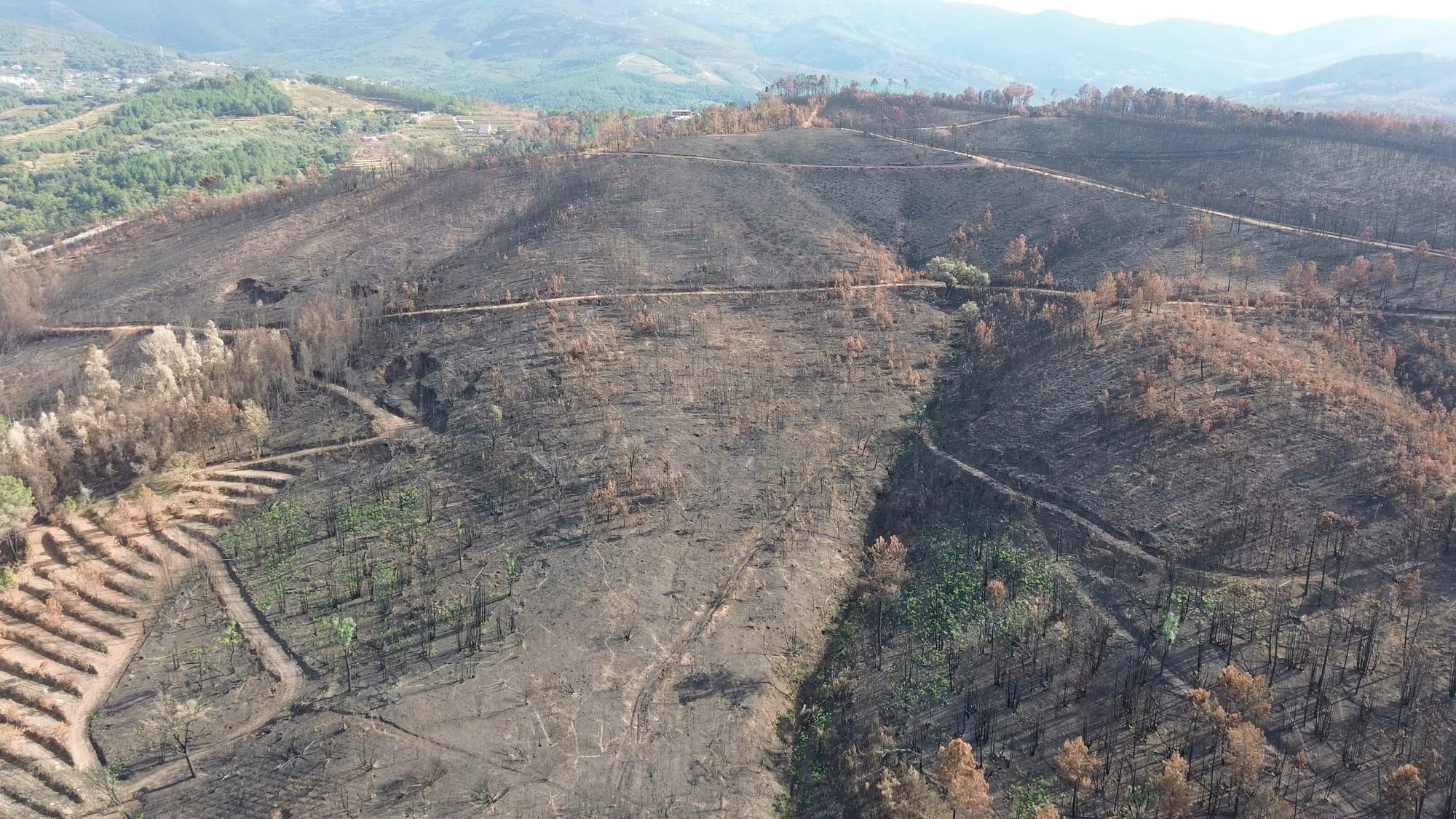
As we start our last active campaign day, today, Friday the 23rd of October 2026, Miracle Project’s flagship site is 94% free
So far, 495 people have joined in taking this land off the market — never to be sold again, and only to be used for regenerative purposes.
14.6 of Miracle Mountain's 15.5 football fields (11 hectares) have been liberated » less than 1 field to go!
And what then, senhor?
Well, first off, celebrate. We're not done, but we've raised the money to sign the deed (for land purchase taxes and fees we have a bit more time) — and good endings lead to good beginnings.
This post is about one of those beginnings. 90 million litres of it, falling from the skies, every year, in about 75 days — almost entirely between November and February.
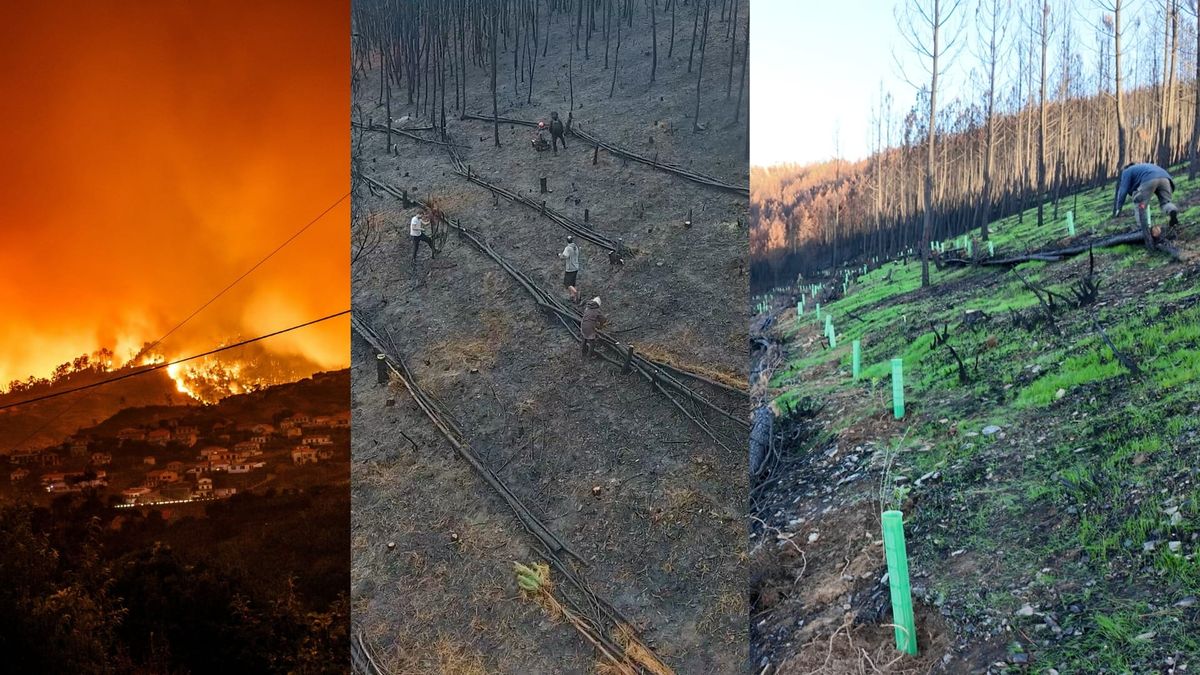
Summers here in central Portugal are bone dry, and winter rains flush water down the mountain, eroding and taking whatever is left of the already degraded topsoil.
Both are common. Both are a daily reality in many places around the world. But neither are natural, let alone necessary.
So, knowing that lack is a human creation,
we’re practising to let abundance be our teacher. And though we may never fully comprehend the workings of life, we are sure of one thing: we’re more than equipped to dance with them.
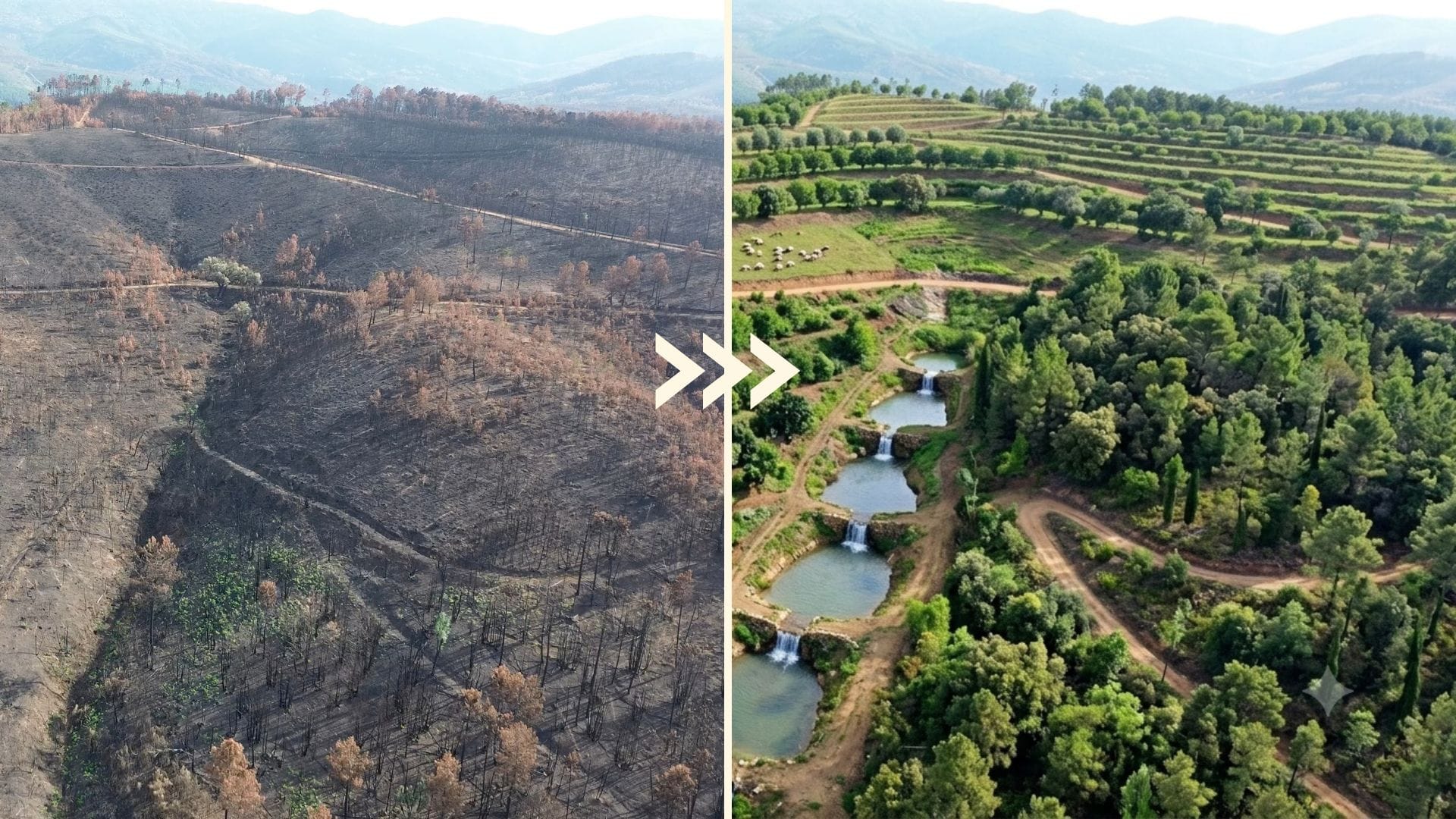
In this video, we take you from the foot to the summit, explain why living soil is key but not the only key, and we show how we’re learning to apply techniques such as living lines and beaver dams to help water slow down, spread out, and sink into the ground.
The aim? Replenish groundwater reserves, boost the ‘biotic pump’, and cool the microclimate — all with what the land already receives, more than enough.
↡ Watch the video
↡ Credits & summary
↡ More inspiration
🎥 Video
💫 Inspired?
1 — Watch 'one of the best regen videos ever' (not our words 😄), and help us to free this mountain and save the planet — seriously:
2 — Help other people find this video post — and help us build community around the mission:
» Like, repost & share here on LinkedIn, here on Instagram, or on other social media.
📜 Video chapters:
- 0:00 Intro
- 0:46 — 800 millimetres up to my crotch
- 0:58 — 90 million litres, 36 Olympic pools, 75 days
- 2:34 We cannot lose water
- 3:03 No beat, no marathon
- 3:48 Respect the dirt!
- 4:56 The situation is bad (good news!)
- 5:36 A blue, pumping heart
- 7:52 Water connects communities
- 8:45 Shortage is a human invention
- 9:15 Join our campaign:
↡ Credits & summary
↡ More inspiration
💫 Credits & summary
Thank you MaatschapWij.nu — One of the Netherlands’ only good-news-only platforms for a greener, healthier and more connected society, promoting our mission and sponsoring part of our video work. » MaatschapWij.nu
🪇 Music used: Byzantine Knights by SashaBranislav Markovic and Divider by Chris Zabriskie
🌄 Cover image: Panagiotis Falcos on Unsplash.com
Video Summary
Introducing the numbers
- Miracle Mountain receives 800 to 1,200 mm of rain a year. Every millimetre equals one litre per square metre, so on 111,000 square metres (about 15.5 football fields), one millimetre is 111,000 litres.
- At the conservative 800 mm, that’s 90 million litres a year, or 36 Olympic swimming pools. This could sustain 1,350 average Portuguese people.
- For someone (yours truly 😄) who currently lives without running water and uses about 20 litres a day, one year of rain on this land will last 12,400 years — or 124,000 years at two litres a day of drinking water.
Why the water doesn’t stay
This rain falls in about 75 days, almost all of it between November and February, and summers are bone dry. On a heavy day of rain (let’s say 30 mm), 3.3 million litres of water falls on the land, with much — if not most — being lost to runoff. It crashes through, erodes, takes topsoil with it, and leaves almost as soon as it arrives.
Natural? Anything but. It’s simply a sign of a disturbed water cycle. Try running a marathon with a heart that’s not beating.
Living soil
Land very often rejects water because it’s too low in organic matter. Organic matter is everything in the soil that is or was once alive. It turns “dirt” into living soil, full of tiny spaces that give water a home.
Soil with less than 4% organic matter is considered weak; above 4% is considered lush; above 10% is considered excellent. In Portugal, around half of the land falls below 4%. Which is good news — we can do something about it! We can rebuild the soil food web through planting, mulching, grazing, and everything else that supports life and that we need not invent, because it’s natural.
Slowing the water down
As a sponge, even the richest of soils has its limits. So, we’ve also begun shaping the landscape to help it slow, spread, and infiltrate water, recharge the aquifer, and a bit further down the line, cool the microclimate.
We’ve started at the top with mini barriers or ‘living lines’, that lead down to the first two beaver dams in the gully (we’re copying beavers to the best of our abilities 😄). It’s early days, and later updates will show more.
Abundance and community
Because the lowest part of the land receives water from the mountains above, Miracle Mountain’s catchment area is much bigger than the land itself. And through this, we’re learning to see water as the number one connector of communities.
So, what about water shortage? A human invention. A planet with so much water cannot have a water shortage. What it can have is people who learn to work with its abundance to build communities — human and non-human, that work for all of life.
The campaign
Miracle Project is raising funds to buy the land and place it in a foundation, so it can never be sold again and can only be used for regenerative purposes. Every euro given liberates one square metre:
» Free your piece of the planet here!
🌄 More inspiration
 Raymundo Resink
 Raymundo Resink
 Raymundo Resink
 Raymundo Resink

Inspired by what you see?
Help other people find our work — and help us build community:
Member discussion