
VIDEO UPDATE #5 🌀 How We’re Learning to Revive Natural Water Cycles - Part I
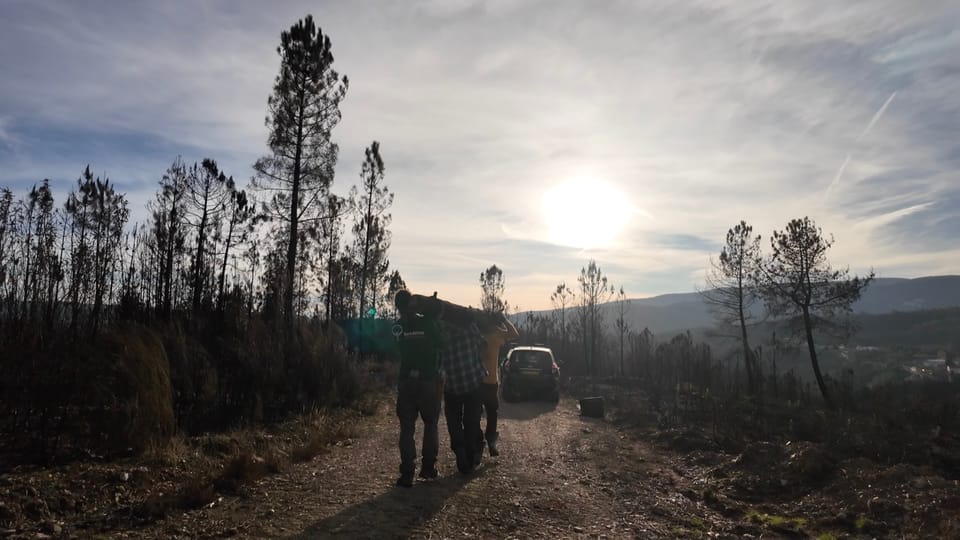
Changing how we look at climate, droughts, fires, and floods—and changing how we deal with them.
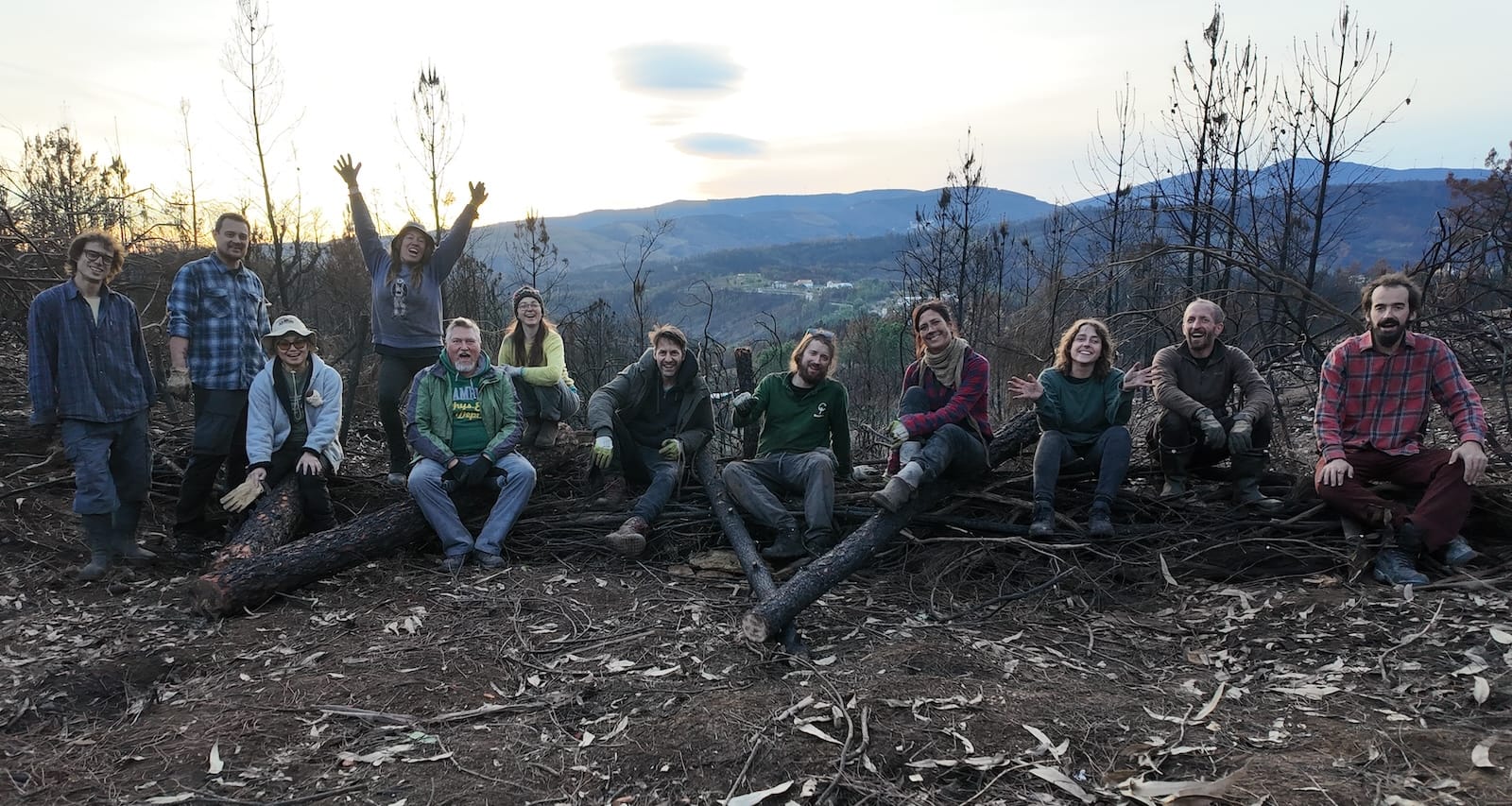
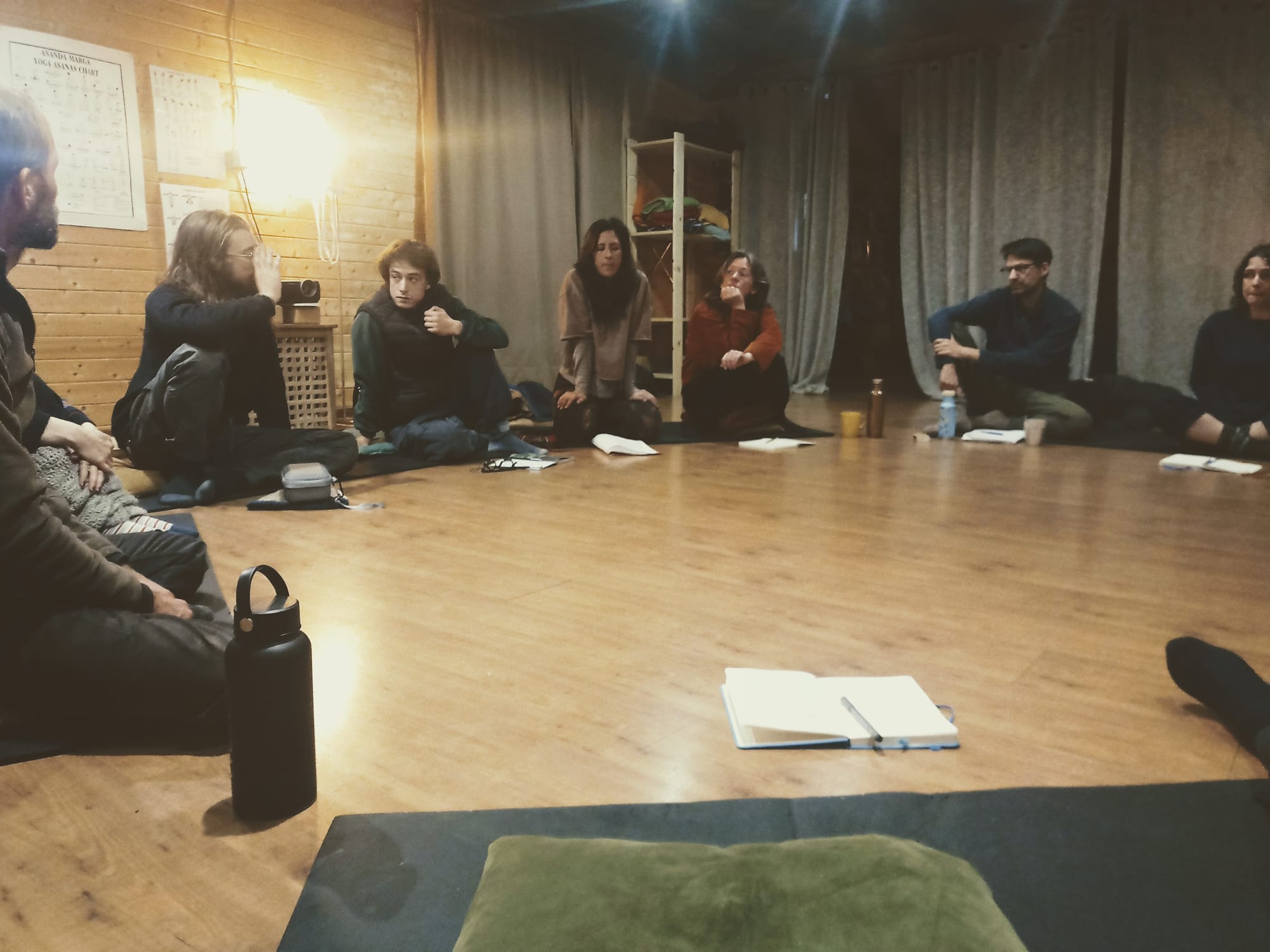
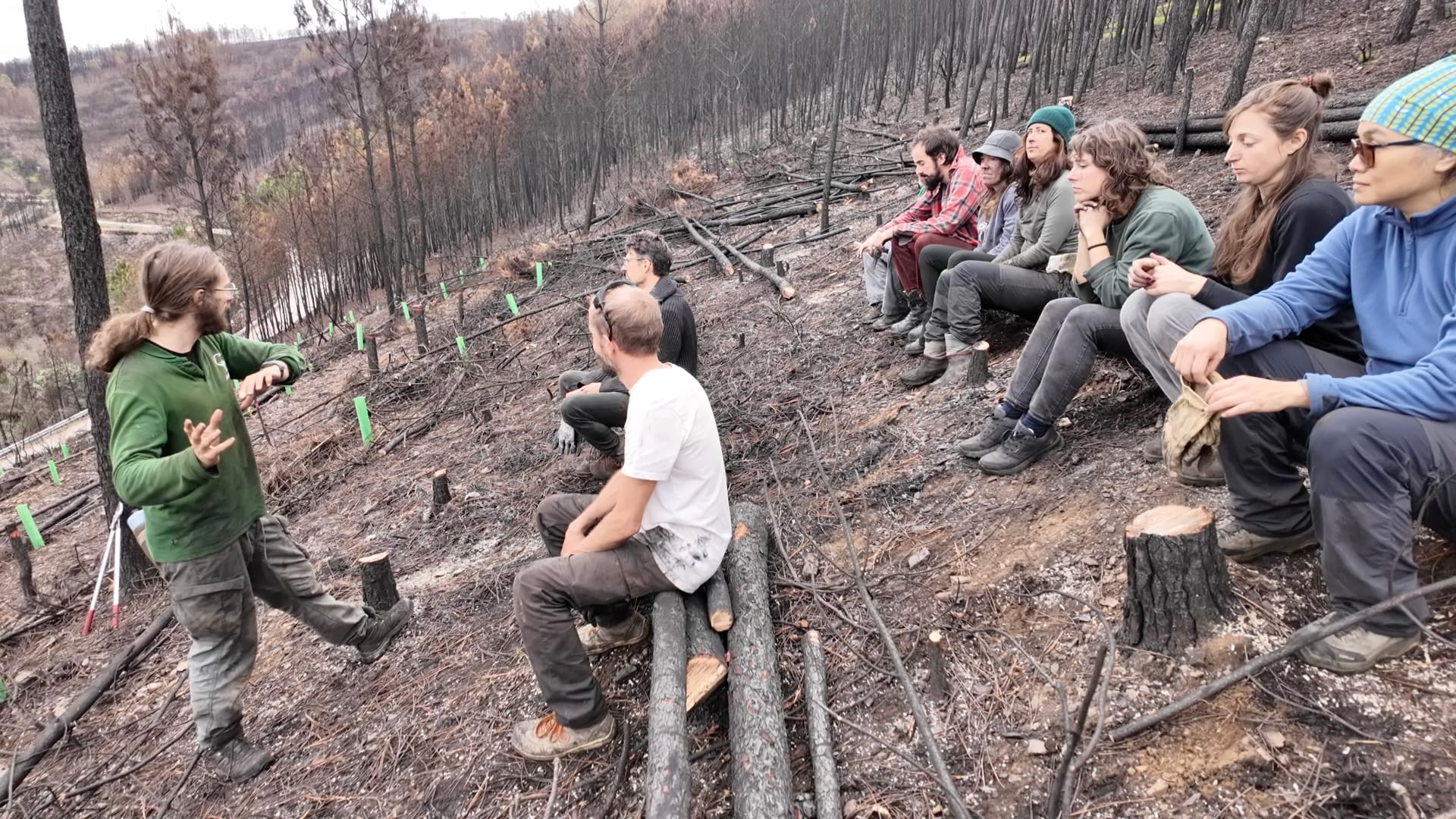
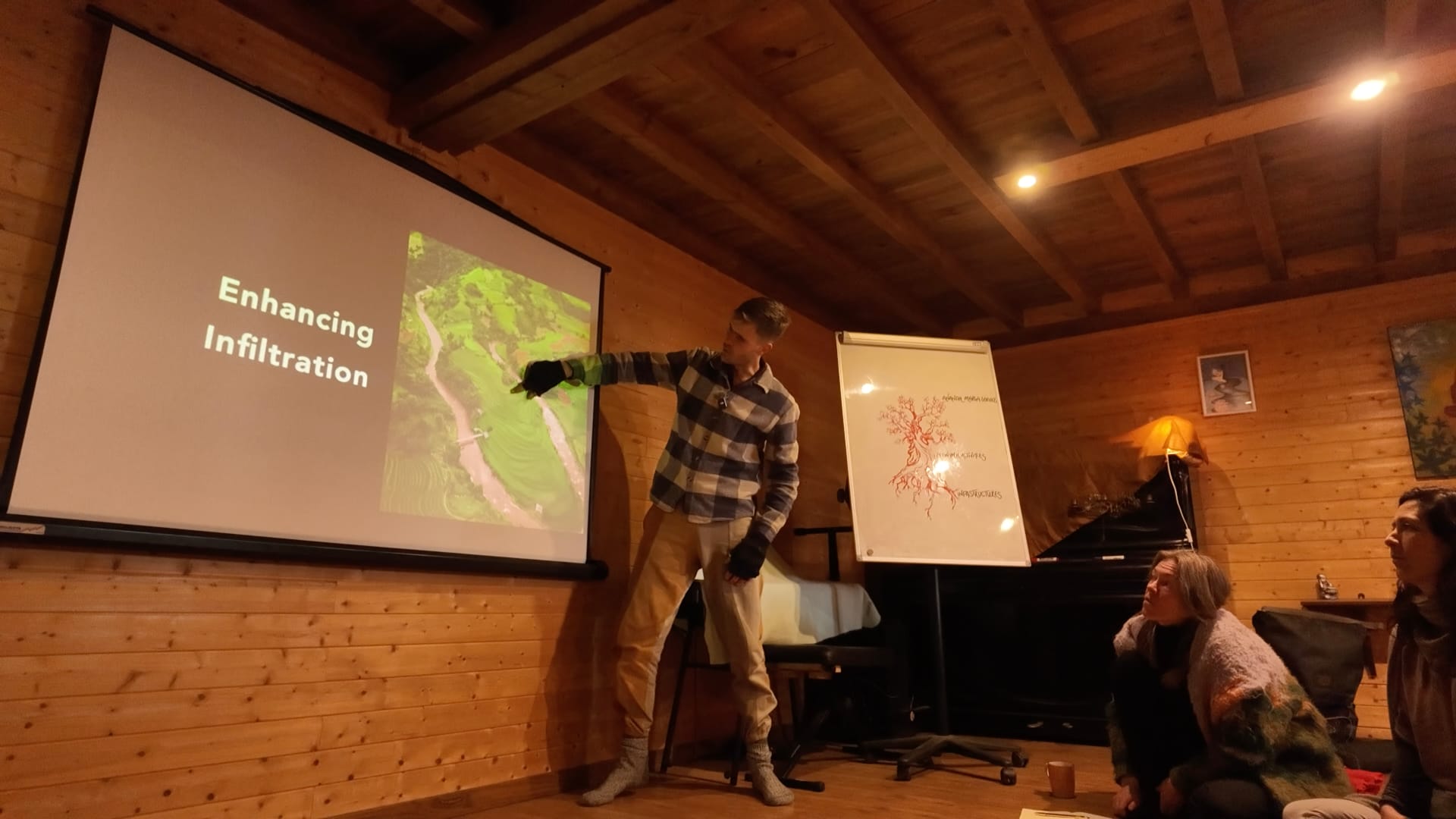
In November 2025, we gave a weekend course in Central Portugal on Reviving Natural Water Cycles. We dove into what’s really going on in our climate, and what it takes to actually heal it: living landscapes.
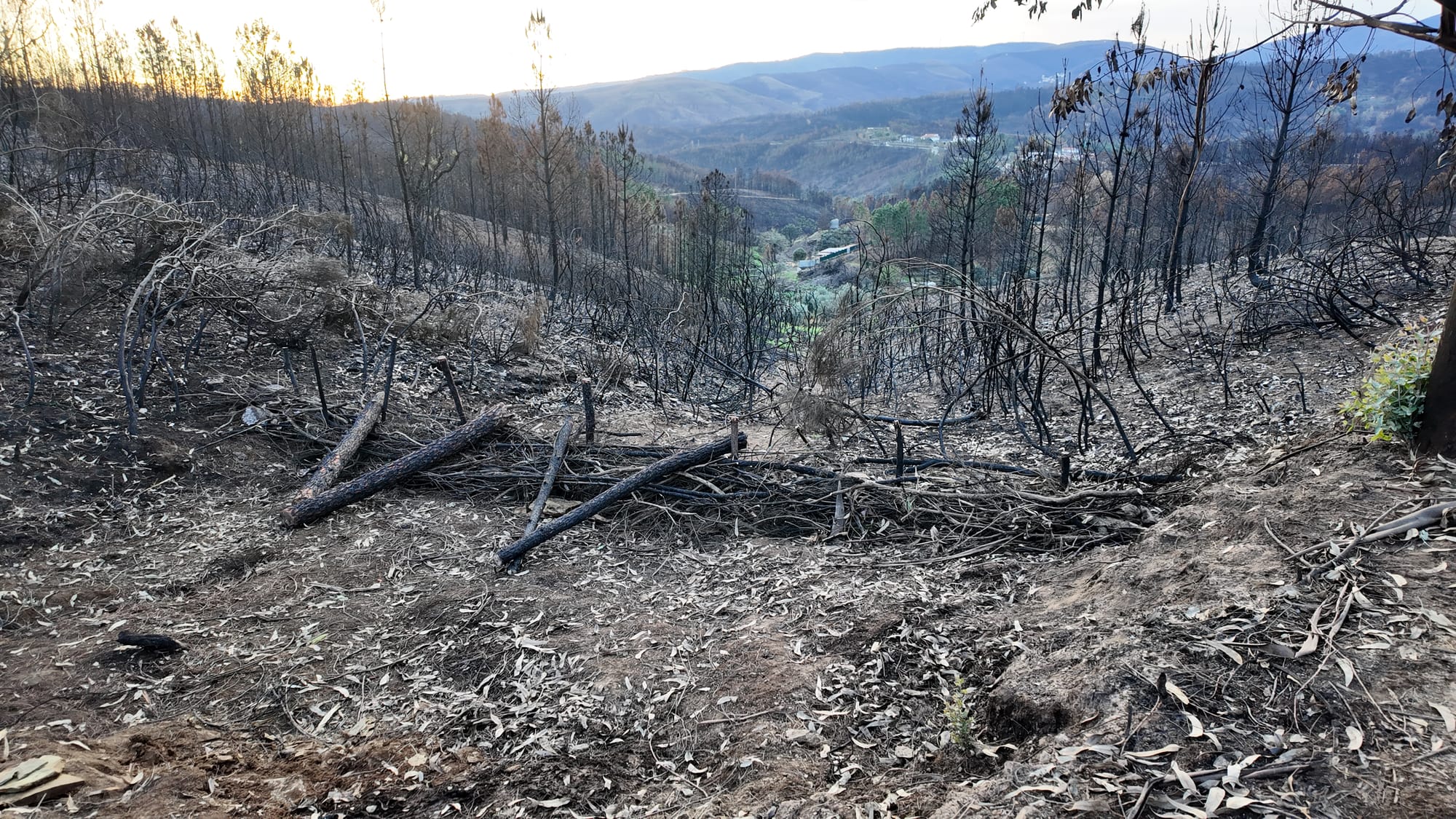
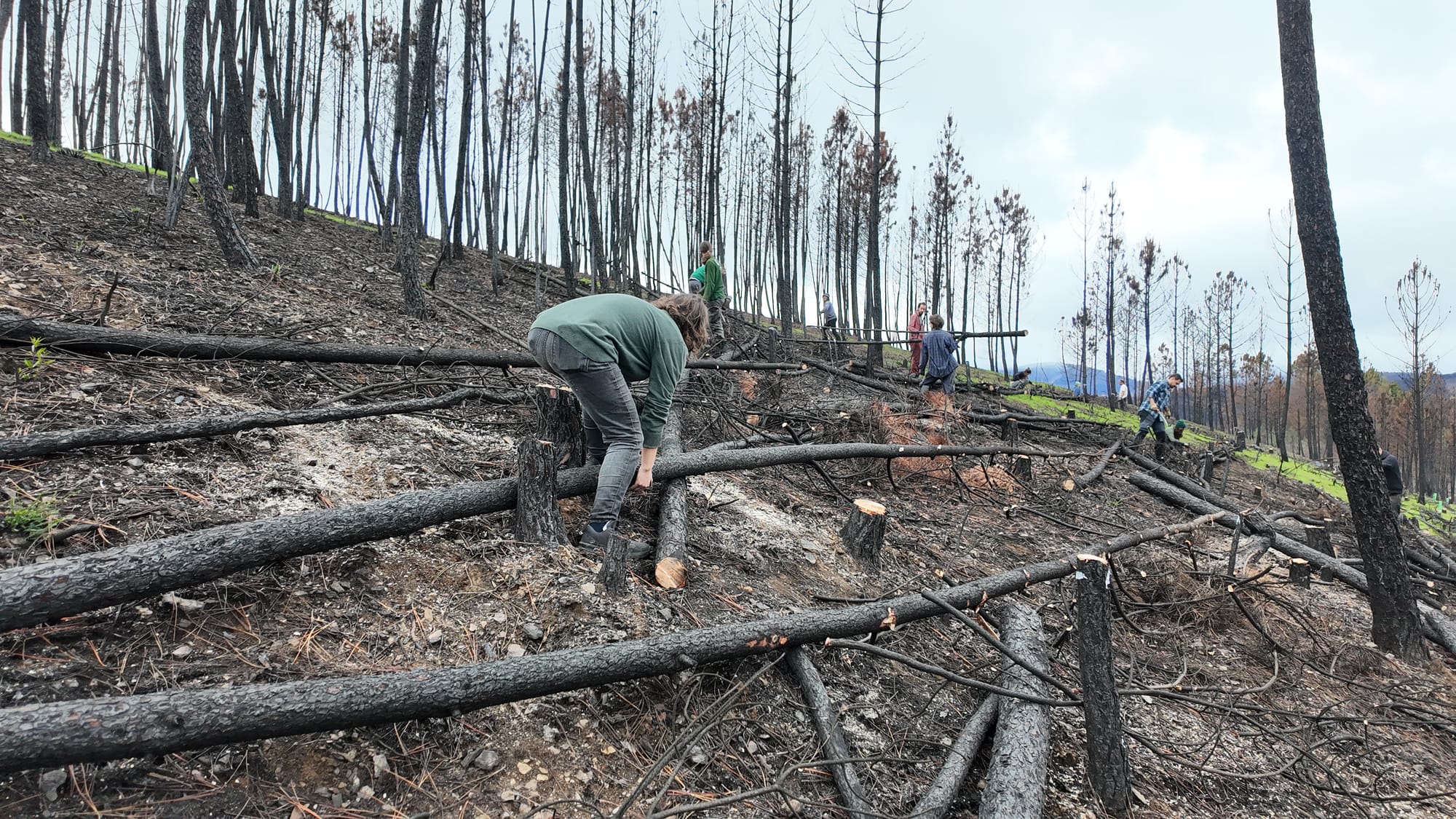
The theory we offered is about attitude more than technique. During hands-on practices, we focused on helping water to slow, spread and sink into the ground—instead of running off, eroding, and degrading the soil.
In this post, we’re sharing:
↡ A trailer of the presentation video
↡ A written summary of the full presentation
↡ Reflections from participants
↡ Credits, thanks, and links to more
The full presentation and Q&A session are available to members below.
🎥 Trailer (2 min.)
If this sparks something in you
and you’d like to go deeper…
Become a paying member of this platform
Get full access to the presentation, Q&A session, bonus resources, and further inspiration—while supporting our mission:
If a paid membership isn’t financially accessible to you, we offer a Global Equity Membership. Learn more in our FAQs.
📜 Presentation Summary
Prologue—What’s really going on
Beyond visible symptoms like droughts, fires, and floods lie deeper systemic causes. Two short animations by the Water Stories team (our main mentors) explore how:
- the natural water cycle functions;
- how human activity has disrupted it;
- a cascade of consequences that are all related, but not natural—and very solvable.
I. A mindset shift
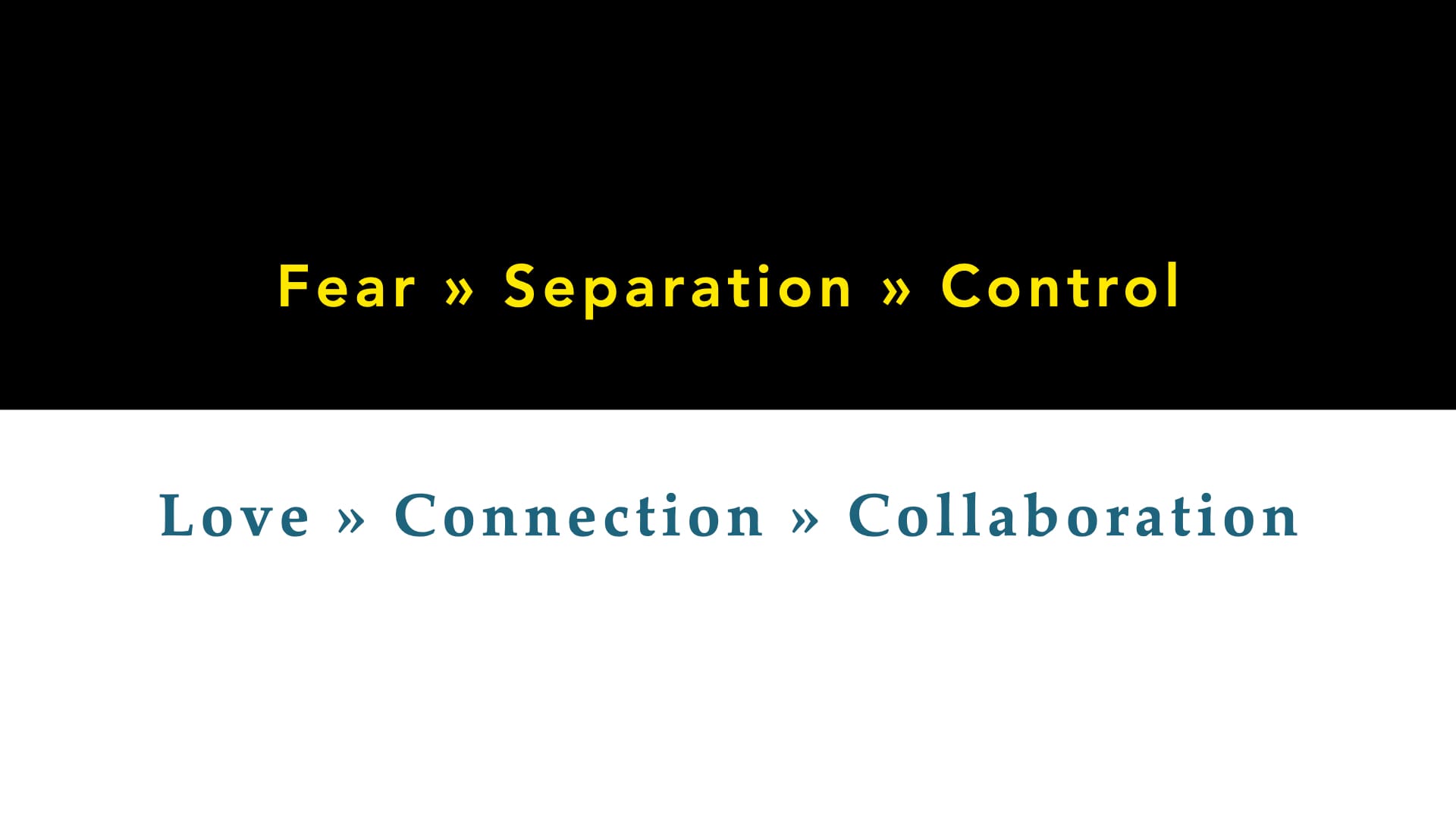
- Going from control to relationship, from fear to connection, and from seeing ourselves as separate to understanding ourselves as participants in the regeneration of life.
- Reviving natural water cycles isn’t just about applying techniques—it’s about restoring the right relationship with the land, each other, and ourselves.
II. Dominant narratives
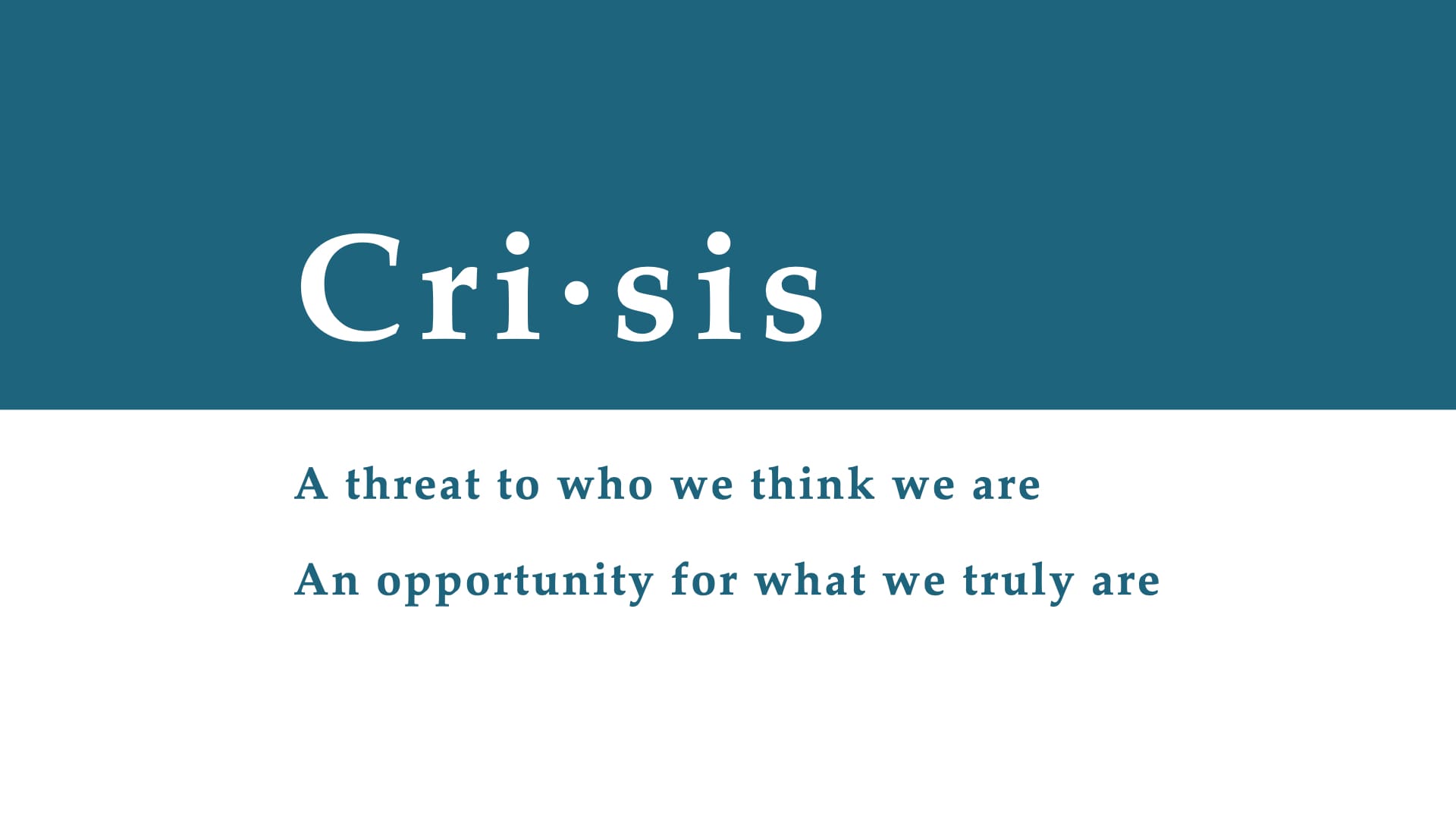
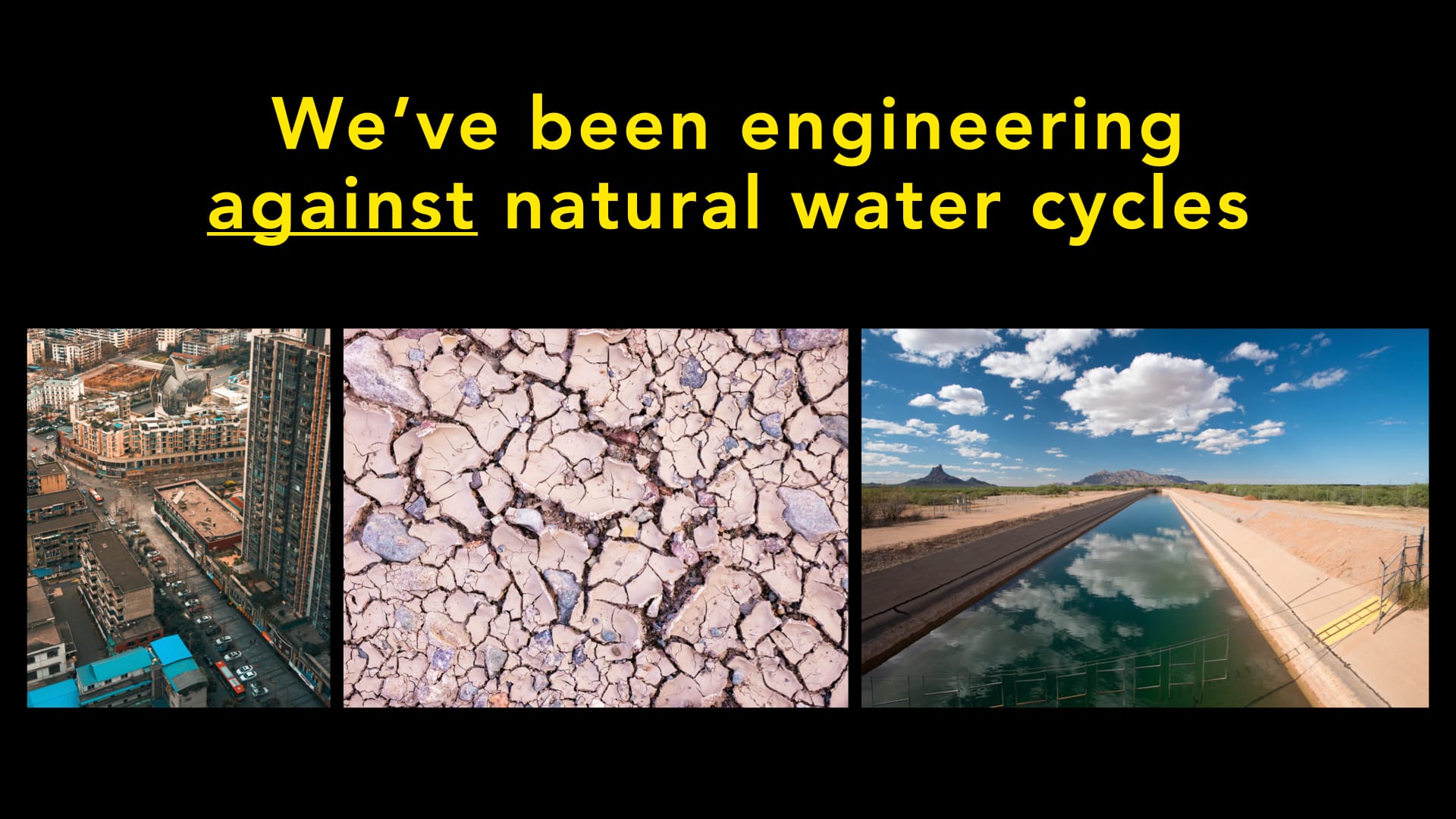
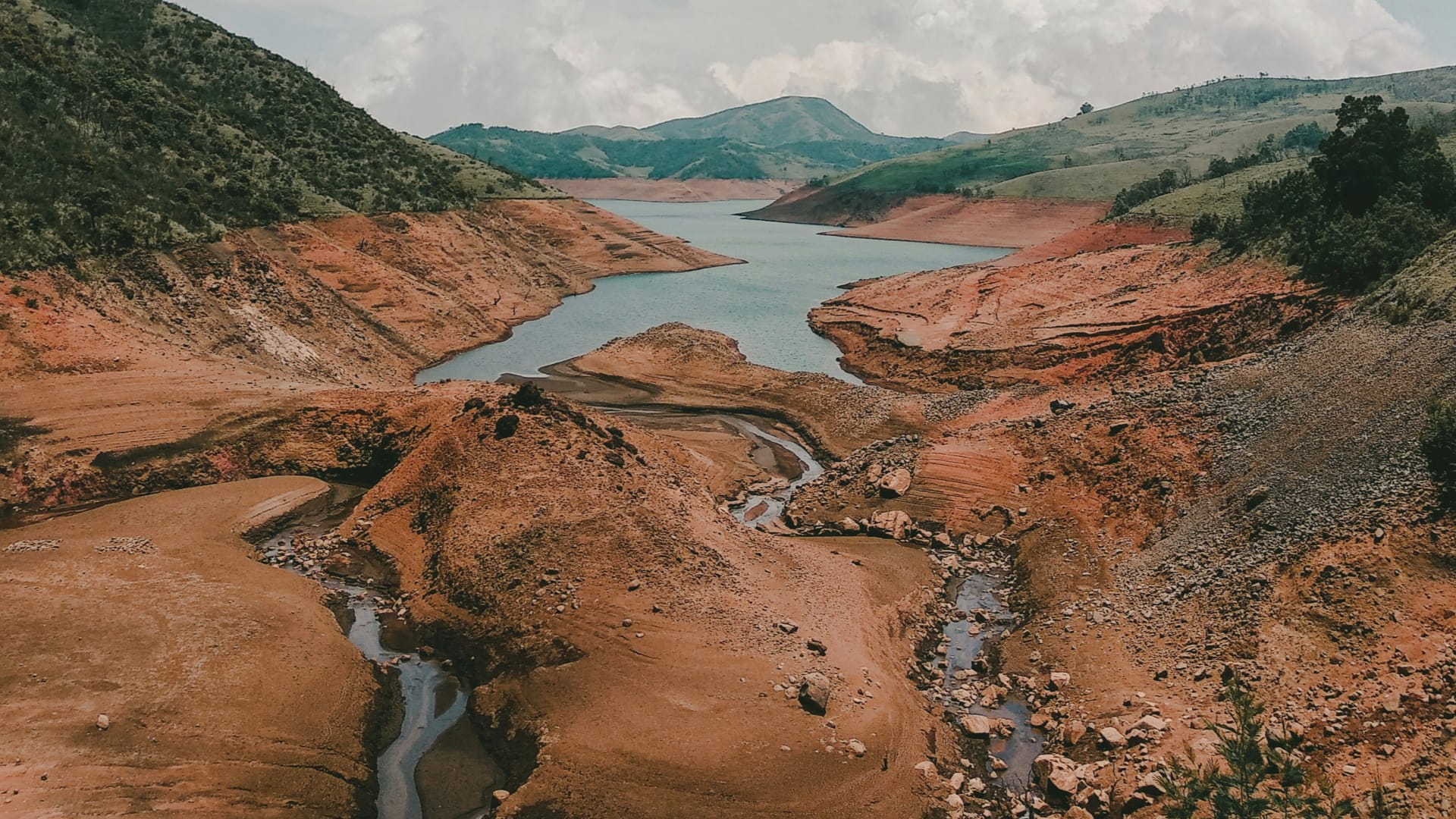
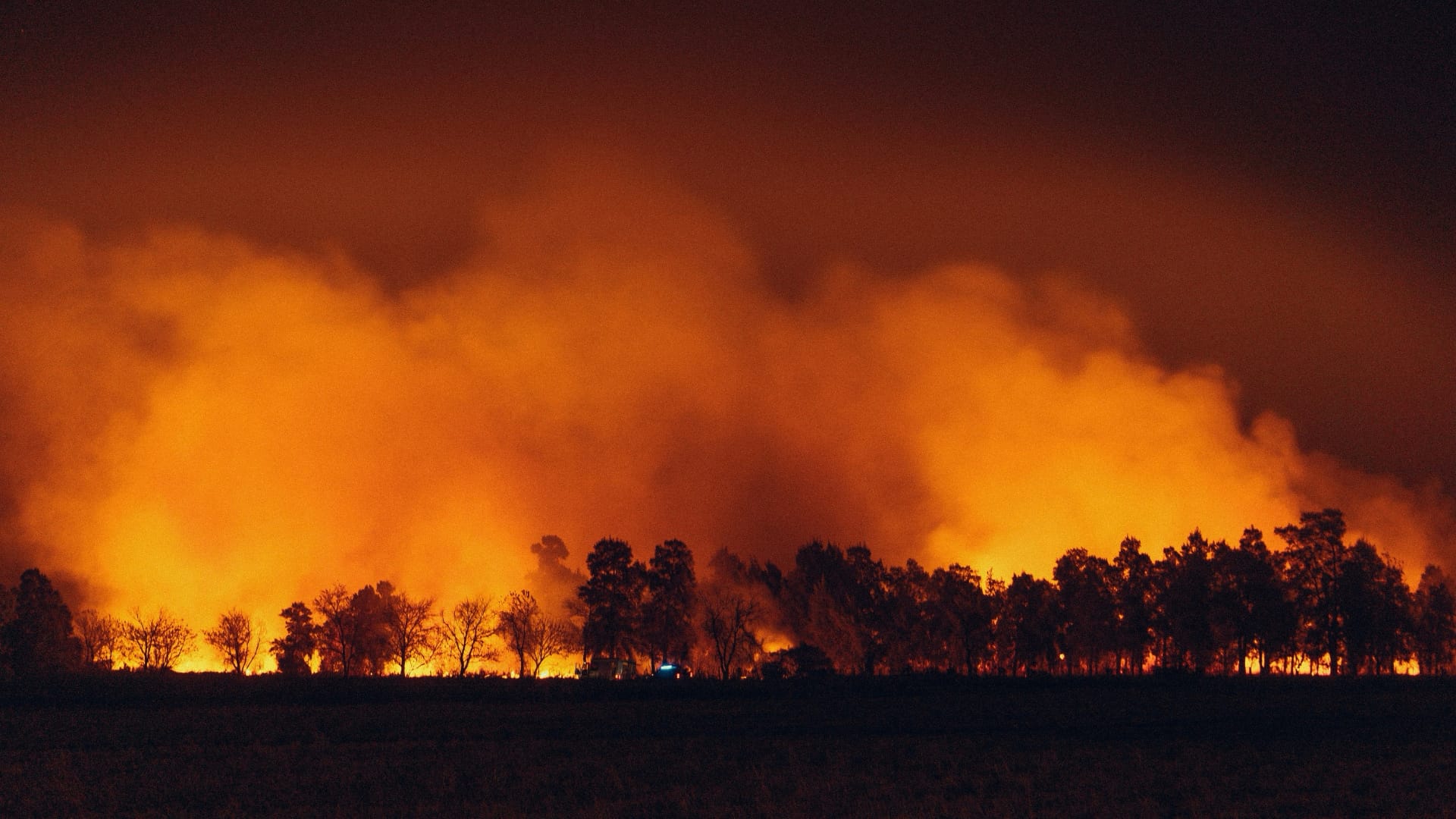
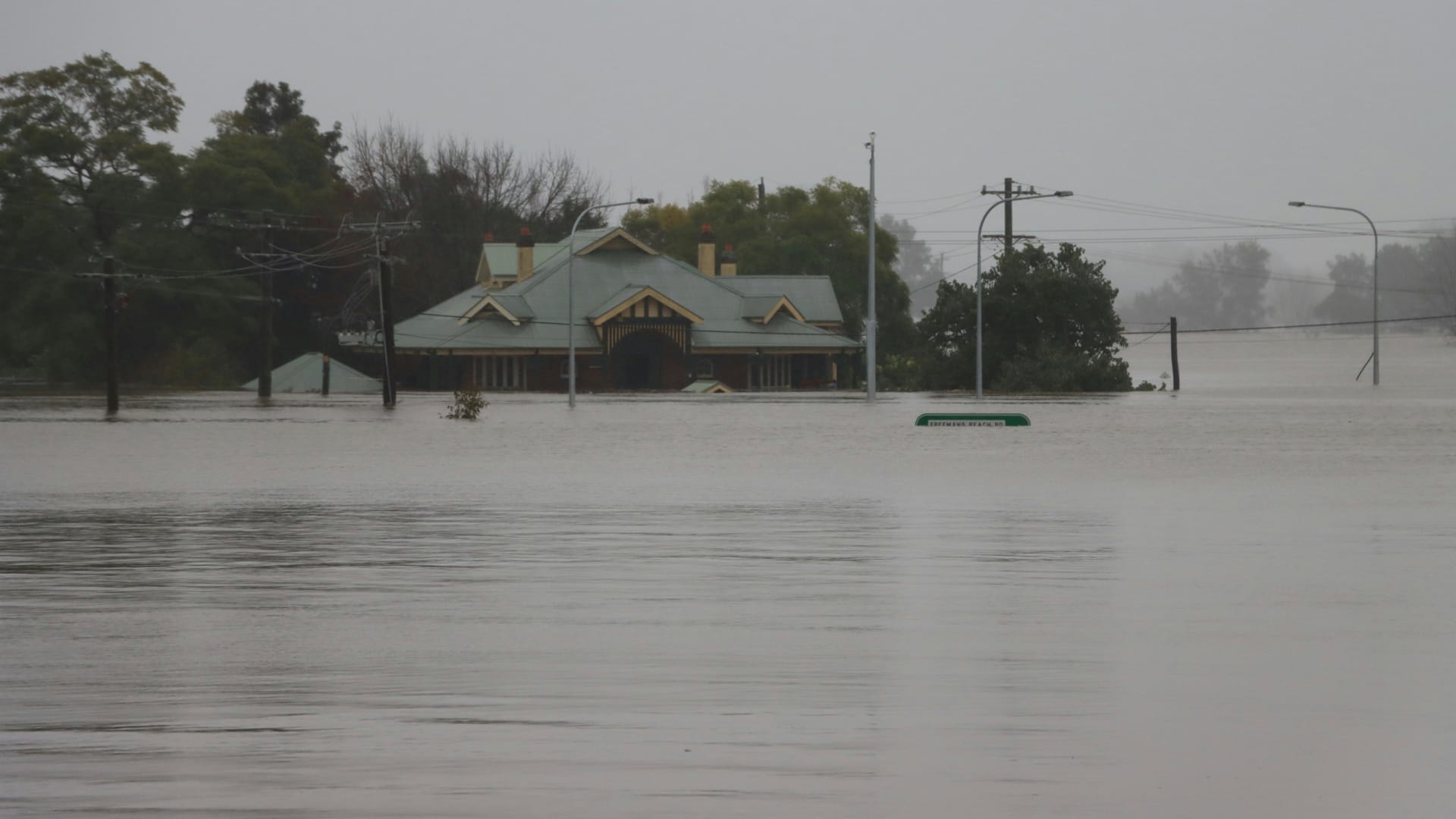
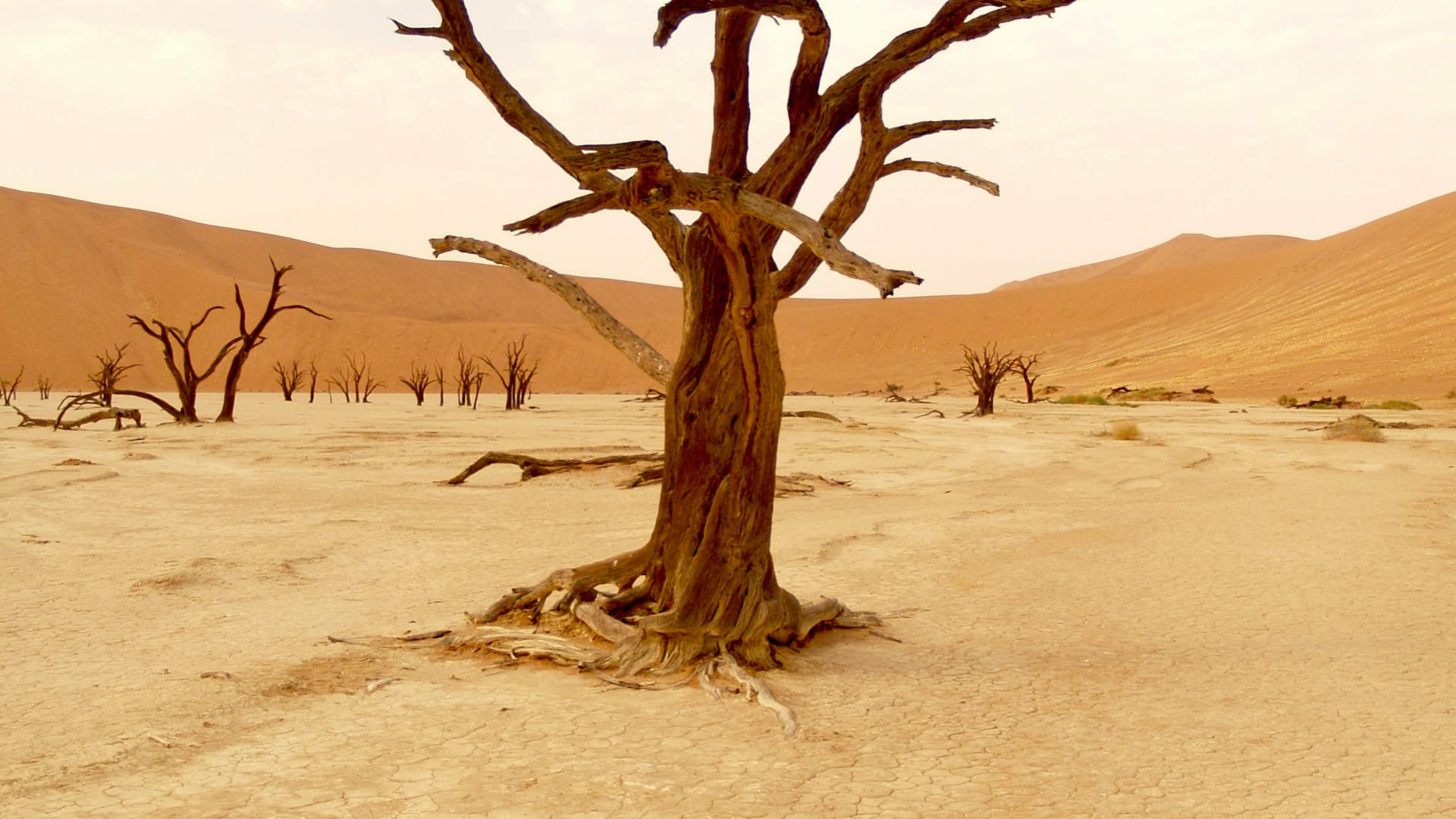
It’s not primarily ‘the climate’, not simply CO₂, and not ‘the eucalyptus tree.’ Such ideas distract us from seeing the real levers of change: our land practices, our broken water cycles, our disconnection from nature.
Through recent and local examples, including a flash flooding event just days before this course, we show:
- how degraded landscapes connect and amplify fires, floods, and droughts;
- how restoring the soil’s capacity to absorb and hold water can reverse the spiral of destruction.
III. The work
What can we actually do? We explore several proven strategies:
- Enhancing infiltration through earthworks and rehydration
- Creating (perennial) water bodies to cool and hydrate land
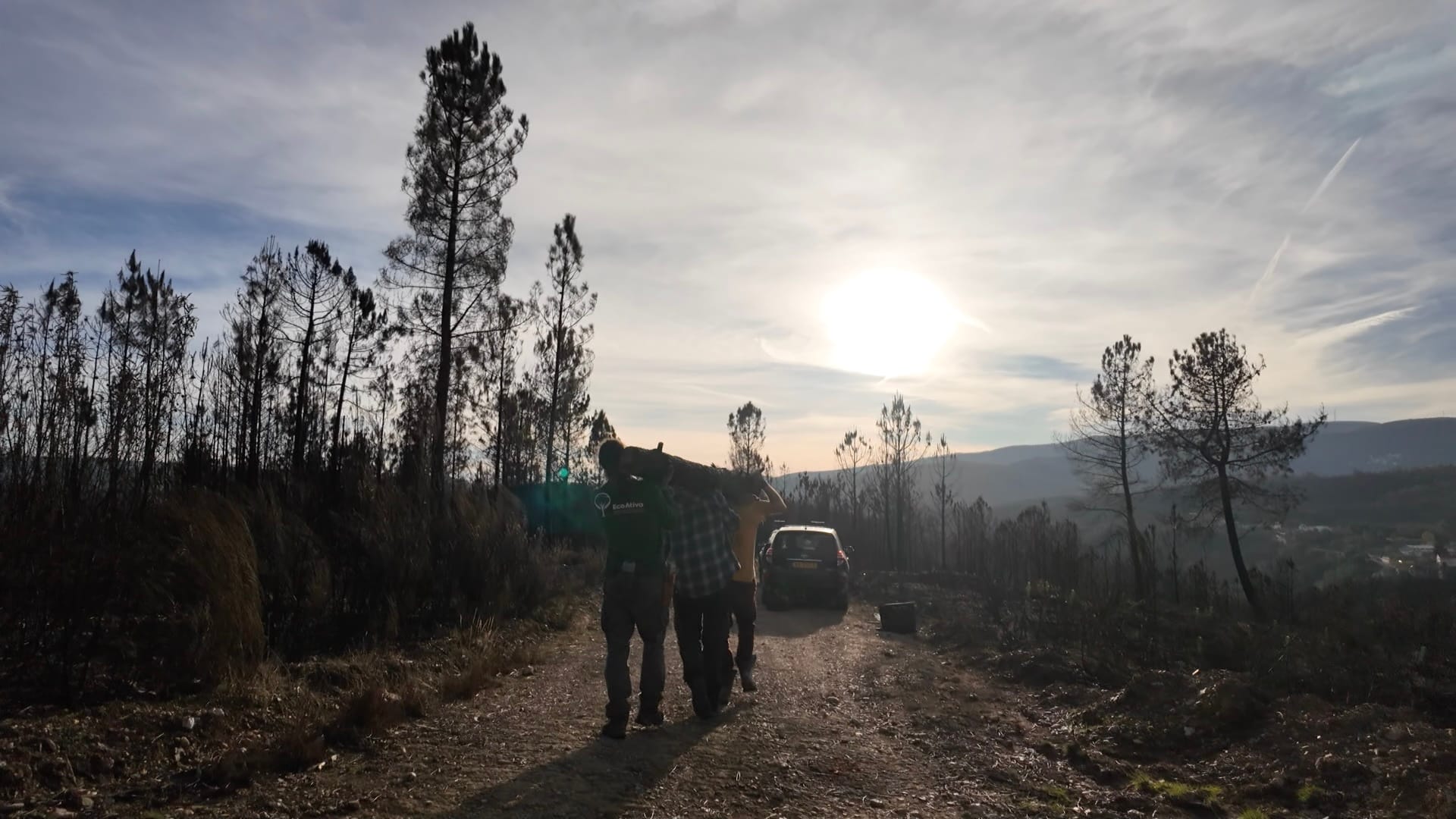
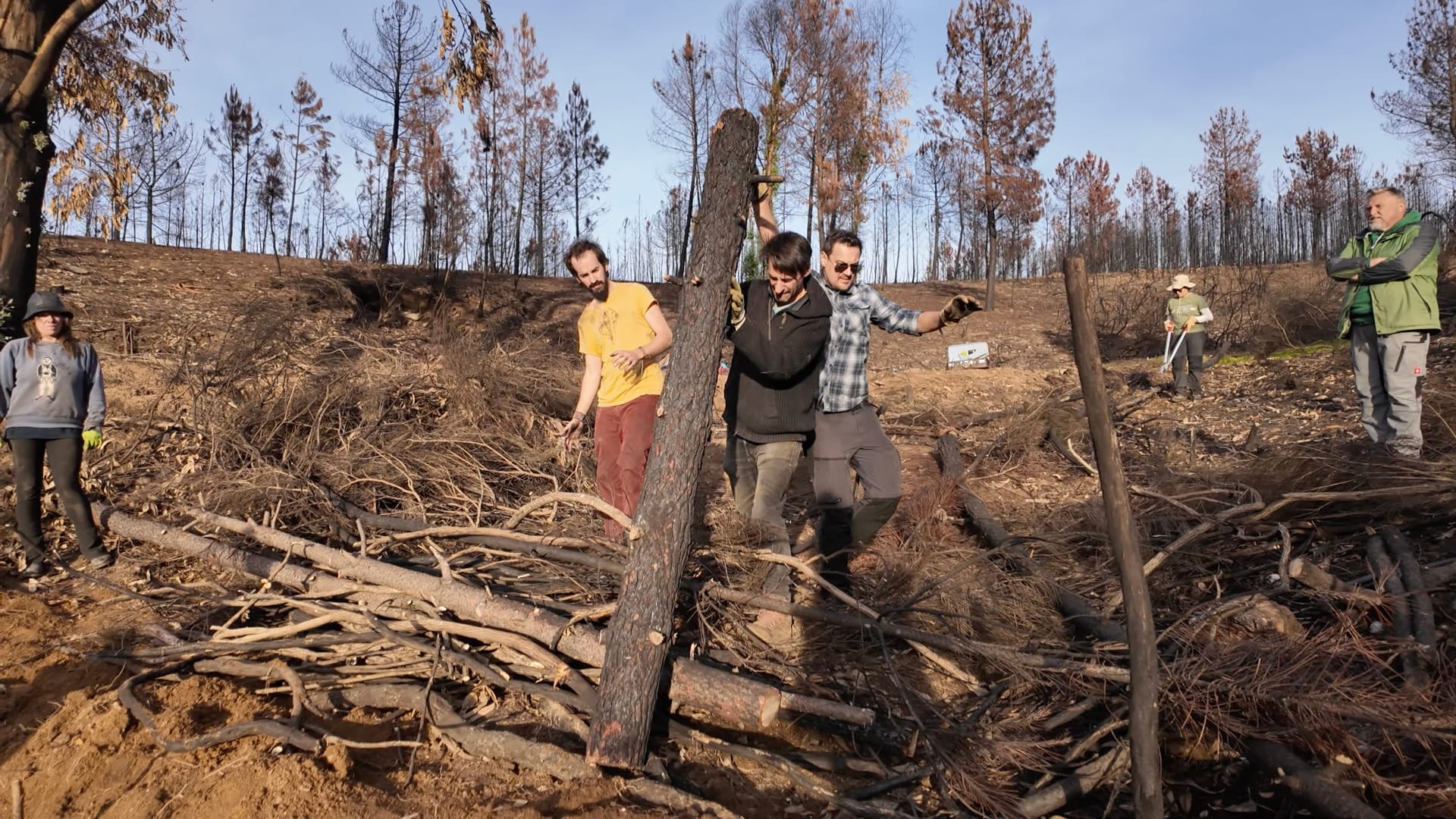
- Building retention barriers with materials already on-site
- Mimicking natural processes, including the role of beavers (and how we can learn from them)
- Designing in collaboration with the landscape’s own intelligence, using all of our senses to read land and read water
And we challenge the fear of ‘getting it wrong’—failing forward instead of waiting for the perfect plan (and getting stuck in Analysis Paralysis):
- experimenting,
- modeling,
- observing,
- and learning—just as nature does.
We humans are a very useful keystone species on Earth. Healing landscapes is not about leaving them alone—it’s about teaming up with them.
🗣 What people said about the course
“The presentations were excellent, engaging, and concise—and I loved the group vibe and practical activities. This course gave me the knowledge and experience to tackle challenges on my land with confidence and renewed purpose.”
Adam Thomas, Syntropic Ecosystem Designer and Builder
“Super knowledgeable, sensitive and friendly teachers, and a course that filled me with inspiration, motivation, and the confidence to start sharing what I’ve learned. It has stayed with me ever since, like the opening of a big dam, releasing the water free to run its true and natural course!”
Flor
“I left, boosted by inspiration and the desire to act. I even decided to explore steering my career (as a copywriter) in the direction of regenerative agriculture.”
Thomas van de Loo
This is Part I of a deeper exploration into what it means to restore living water cycles.

💡 Learn more about Miracle Project’s vision and mission on our main website
🎁 Thanks
EcoAtivo and Ananda Kalyani
For co-facilitating and hosting a hope-giving and inspiring weekend.
The wonderful team @WaterStories.com
for being such generous and impactful teacher-trainers—and for a heartfelt partnership.
» WaterStories.com
The equally wonderful team @MaatschapWij.nu
One of the Netherlands’ only good-news-only platforms for a greener, healthier and more connected society, promoting our mission and sponsoring part of our video work.
» MaatschapWij.nu
🪇 Music used in the trailer
Scattered Wave by Asura
More on this platform:
 Raymundo Resink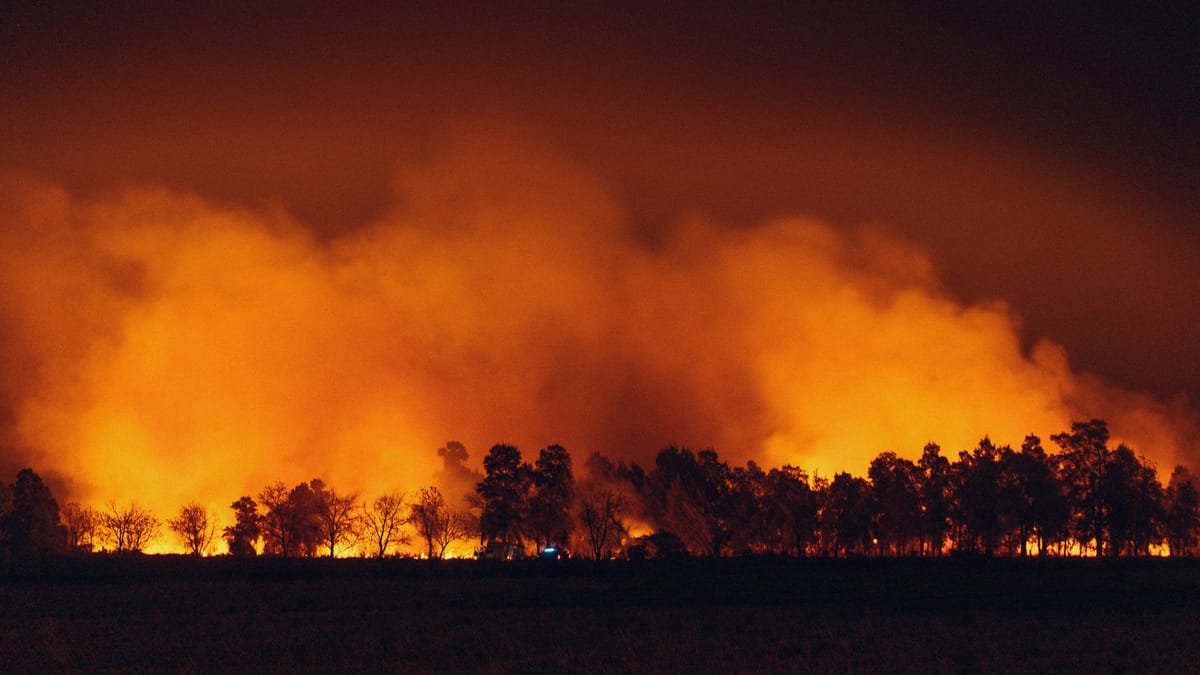
 Raymundo Resink
 Raymundo Resink
Member discussion